Music of the 1970s - Intimacy, Excess & Reinvention
Go deeper with the related Melody Mind article and keep the story moving from audio into context.

Related Article
Go deeper with the related Melody Mind article and keep the story moving from audio into context.
Music of the 1970s - Intimacy, Excess & Reinvention
Loading transcript...
Could not load the transcript.
The 1970s were not a clean transition. They were a decade at a turning point.
After the idealism of the 1960s ended, music didn't collapse. It evolved. It became
more intimate, more physical, more theatrical, and more fragmented. Sometimes heavier.
Sometimes quieter. Sometimes built for the club, the car, or the bedroom. Always
searching.
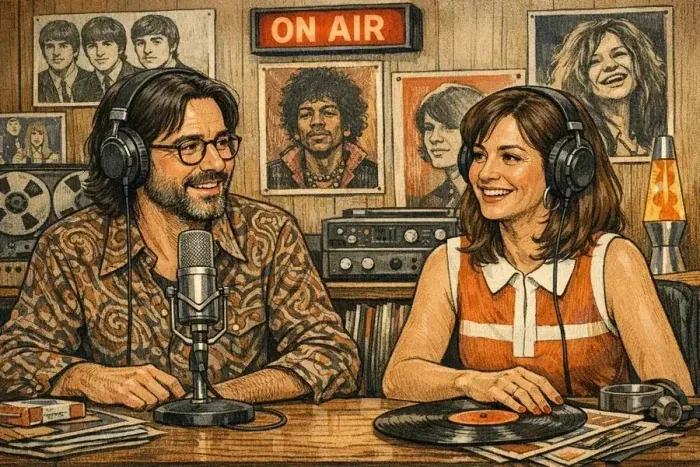
In this 76-minute deep dive, Daniel and Annabelle explore a decade that seemed to hold
everything at once.
You'll learn:
This isn't a hits playlist.
It's an emotional journey through pressure, patience, fracture, and reinvention.
The 1970s made softness and heaviness coexist. They allowed spectacle and restraint to
share space. They let unfinished questions remain open. They also let local scenes and new
technologies pull popular music in several directions at once.
Music doesn't need to resolve to be meaningful. It just needs to be honest.
That is what the 1970s taught us.
Daniel - Listens for structure, endurance, and the quiet choices that turn survival
into sound.
Annabelle - Hears soul as lived experience, emotional intelligence, and long memory
carried through the voice.
Together, they explore how the 1970s embraced contradiction - and why that matters now.
Want to explore the 1970s more slowly?
Our Knowledge Page expands this conversation with:
The podcast is shared listening. The Knowledge Page is deeper understanding.
Subscribe to Melody Mind for weekly episodes on music history, genre evolution, and the
social worlds behind the sound.
Join us - there's always more to hear.
#MelodyMind #1970sMusic #SoulMusic #DiscoEra #DavidBowie #LedZeppelin #StevieWonder
#MarvinGaye #PinkFloyd #DonnaSummer #ProgressiveRock #GlamRock #MusicHistory
#DeepListening #MusicPodcast