How Did Gospel Become the Sound of Modern Vocal Pop?
Mahalia Jackson, Sam Cooke, Aretha Franklin, Whitney Houston, Beyoncé.
They all started in the same place.
In this 50-minute journey, Daniel and Annabelle trace the living lineage from Black church
pews to global stages, showing how Gospel became the blueprint for modern singing.
What You'll Discover
You'll learn:
- How church-trained phrasing, harmony, and breath control reshaped popular music
- Why the move from sacred to secular singing created both freedom and tension
- How backing vocals, studio layering, and production changed what a "great voice" means
- Why Gospel technique still structures modern pop even when listeners no longer name it
- Sacred Foundations - Thomas A. Dorsey, Mahalia Jackson, Gospel quartets, and the
- Soul's Breakthrough - Ray Charles crossing the sacred/secular line, Aretha's
- R&B Reinvention - Whitney Houston, Janet Jackson, Mary J. Blige, neo-soul, and the
- Modern Vocal Pop - Beyoncé, Frank Ocean, Solange, Adele, Ariana Grande, and the
- Global Echoes - diaspora exchange, streaming platforms, algorithmic gatekeeping, and
The Real Story
This is not just a story about big singers.
It is a story about structure.
Gospel gave modern vocal music its emotional and technical architecture: breath control,
call-and-response, harmonic stacking, dynamic build, and the idea that a voice could carry
both personal feeling and collective memory. Those habits were shaped in Black churches,
then carried into radio, records, television, arenas, and streaming platforms.
When artists like Aretha, Whitney, and Beyoncé stepped into secular spaces, they did not
leave that inheritance behind. They translated it. Along the way, producers, backing
singers, labels, and algorithms all helped reshape how that voice would be heard.
**The question is not whether Gospel disappeared. It is where it went, and who still gets
credit for carrying it forward.**
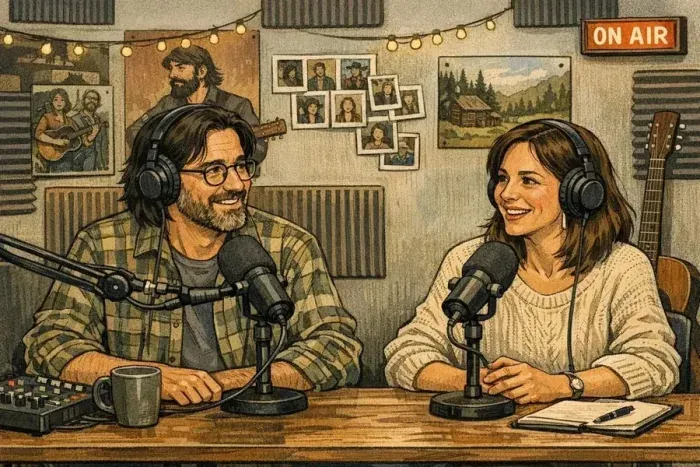
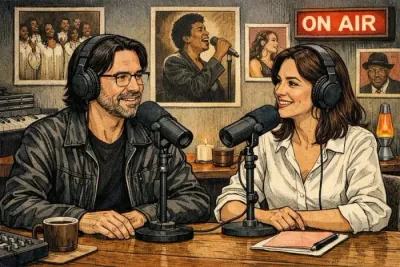
Your Hosts
Daniel - Listens for structure, endurance, and the quiet choices that turn survival
into sound.
Annabelle - Hears soul as lived experience, emotional intelligence, and long memory
carried through the voice.
Together, they explore music not as content, but as inheritance.
Go Deeper
Want to trace the voice's journey further?
Our Knowledge Page expands this conversation with:
- Gospel quartets, choir logic, and the architecture of group singing
- The tension between church authority and secular crossover
- Motown discipline, hidden vocal labor, and producer-led vocal staging
- The diaspora loop, the global Gospel echo, and the algorithm era
Take your time. This story gets deeper the more closely you listen.
Love Deep Music Conversations?
Subscribe to Melody Mind for weekly deep dives into music history, genre evolution, and
the stories behind the sound.
Join the conversation.
Hashtags
#MelodyMind #GospelToPop #SoulMusic #RNBHistory #ModernVocalPop #MahaliaJackson
#ArethaFranklin #WhitneyHouston #Beyonce #Adele #BlackMusicHistory #VocalHistory
#MusicHistory #DeepListening #Podcast #MusicCulture